Pages

Wednesday, January 20, 2016

Fly Fishing in Iceland's Glacial Rivers

This guy's explanation nails it.

The Wild Steelheader, January 19, 2016

January 19, 2016

Hello,


As I write this, we are deep in the heart of winter steelhead season. Snow levels have crept down in elevation and river gauges resemble roller coasters.  One thing is now certain: We finally have water.
After a summer of lethal river temperatures and wildfires, is it ok to complain about blown-out or frozen rivers? Probably not.

If we learned one lesson from last summer it was the need to redouble our efforts to restore and protect wild steelhead.

And we are continuing down that path. This winter we will see volunteers planting trees, monitoring stream temps, throwing fundraisers, counting redds, conducting snorkel surveys and taking action for crucial policy changes, all in the name of wild steelhead conservation.

We do this because we are steelheaders -- because opportunity means getting out there on a beautiful river and, if the fishing gods are generous, hooking into a silver bullet.

I wish you good fortune in your winter steelheading, and encourage you to dedicate that same level of passion and action to wild steelhead conservation.

Dwayne Meadows
Pacific Northwest Outreach Coordinator
Trout Unlimited

Three things you can do right now to help wild steelhead

  1. We have a chance to protect 70 key watersheds for steelhead and salmon in the Tongass National Forest, home to some the most intact habitat in the U.S.  Please let your comments be heard by Feb 22nd.

  1. Commit yourself to get involved or donate. Go to a local Trout Unlimited meeting and ask how you can help with your local river. You can find it here. Forward this newsletter to friends and encourage them to sign the Credo. Donate $40 or more and get a Wild Steelheaders United hat. Donate here.

  1. Volunteer for an Angler Science project on Oregon’s Siletz, Smith and Coquille Rivers or on the Hoh or Skagit in Washington. Learn More.

The case for a portfolio of wild-only and hatchery steelhead rivers in Puget Sound

What does “fishing opportunity” mean to steelhead anglers?

The answer depends on who you ask.

For some, opportunity must include the ability to harvest steelhead. But for the majority of anglers, based on our extensive poll of roughly 650 active steelhead anglers, opportunity is defined as being on the water with the chance to catch and release a steelhead.

 So what is a steelhead manager to do given this divide in the community of steelhead anglers and thelegal (and I would argue, moral) imperative to protect and sustain wild steelhead? The solution we propose is a portfolio approach to management. That means we should manage some rivers for hatchery fish, thus providing harvest for those who desire that type of fishery, and manage other rivers for wild fish and catch-and-release opportunity.


Our extensive polling suggests this is the type of management model preferred by most anglers – 62 percent want some rivers dedicated to wild steelhead and others where hatcheries provide harvest opportunity, while the remainder either want hatcheries in all rivers or no hatcheries at all.

The challenge comes with actually implementing the framework. A number of anglers have asked how Wild Steelheaders United would deal with such a challenge.

We describe below how we would implement the portfolio approach for winter steelhead in three different rivers in north Puget Sound in Washington.  This example is timely because decisions are currently being made in this region about how to manage steelhead hatcheries and where to establish wild steelhead management zones.

Skagit RiverFirst, we would manage the Skagit River system exclusively for wild steelhead.  Why? It has by far the largest wild steelhead population of all Puget Sound rivers, roughly 9,000 which is more than the Hoh and Queets rivers on the Olympic Peninsula combined. It has a lot of relatively high quality habitat that can support a fishable (catch-and-release) wild steelhead population and tribal harvest consistent with the tribes’ treaty rights (50 percent of the “harvestable surplus”). And it is a critical population for recovering wild steelhead in greater Puget Sound, which are protected under the Endangered Species Act.

Second, though we believe the Skykomish River has substantial wild steelhead production potential, in the spirit of compromise we would support continuing the current winter steelhead hatchery program in the Sky with a solid monitoring program. If success is defined as the number of hatchery fish caught in fisheries, this is the most successful (and most cost-effective) winter steelhead hatchery of its type in Puget Sound (i.e., segregated hatchery designed to provide harvest opportunity).

Mind you, that is not a high bar to clear given the overall poor performance of such segregated hatchery programs. The Skykomish hatchery should also be operated consistent with standards established by the Hatchery Scientific Review Group to minimize harm to wild steelhead.

Third, in the Stillaguamish River, we suggest experimenting with a different type of hatchery program, one that uses local broodstock to try to rebuild the river’s depleted wild steelhead population. This would enable us to evaluate whether such a hatchery program could be effective for this conservation purpose. To date, there is thin evidence that this is the case, but it could be tried on an experimental basis.

This type of portfolio approach has multiple benefits.

First, it would provide different types of fishing opportunity consistent with angler preference; catch-and-release fisheries for wild fish on the Skagit, and harvest (hatchery fish) opportunity on the Skykomish during the hatchery fish return. The catch-and-release fishery on the Skagit also would increase economic activity in Skagit River communities by adding a fishery that currently does not exist due in significant part to the large number of wild steelhead harvested in past decades.

Second, it would align with the goal of recovering Puget Sound steelhead to the point that they no longer need ESA protection. In particular, ensuring that the “cornerstone” wild steelhead population in the Skagit is spared the harmful impacts of hatcheries and trying to boost the Stilly’s wild steelhead population with a local broodstock program would be consistent with recovery objectives. Harm to the Sky’s wild steelhead would be minimized through use of best management practices consistent with the recommendations of the Hatchery Scientific Review Group and Washington State policy. But it should be recognized that there is absolutely no conservation benefit to wild steelhead of segregated hatcheries such as that used in the Sky, and that there are serious genetic and ecological problems with these types of programs.  The science is very clear on this.

Third, it would enable all of us – wild fish zealots and hatchery fish devotees – to learn how these different approaches work relative to one another in relation to both conservation and fishing opportunity goals. In other words, we will have a large-scale, controlled experiment that we have been sorely lacking in Puget Sound. And as we learn from that experiment, we can improve management.

We at TU and Wild Steelheaders United are going to push hard for rivers with high wild steelhead potential, such the Skagit system, to be managed exclusively for wild fish because the evidence shows that it is the best bet both for reliable, sustainable fishing opportunity and conservation of wild steelhead.

Stepping back from the north Puget Sound example, the challenge of managing hatchery and wild steelhead is a microcosm of a larger issue across the range of wild steelhead in the lower-48. Anglers want sustainable fishing opportunity. We are anglers ourselves. We get that.  At the same time we want to recover wild steelhead, a requirement established in federal law. We believe the portfolio framework described here is the best approach for meeting these dual objectives.
We hope other anglers will see the wisdom in having such a portfolio of wild-only and hatchery rivers and will join us in asking for it.

John McMillan
Steelhead Science Director
Trout unlimited

The State of our Progress

Oregon:
 Chapters in Corvallis, Eugene and Coos Bay are gearing up for another season of steelhead angler science. The Bluebacks Chapter is conducting winter spawning surveys on the Siletz River. The Redsides Chapter and Coastal Cutthroat Chapters are beginning surveys and restoration work on the West Fork of the Smith River. The Coastal Cutthroats are also starting a new project on the Coquille completing pre-restoration surveys to gain a baseline for upcoming restoration work. Watch the great video on Angler Science and Find out more and how you can participate.

California:
An Action Alert circulated by TU and Wild Steelheaders United in December prompting over 789 messages to Congress in support of the Senate’s Klamath Basin Water Recovery and Economic Restoration Act. However, the House of Representatives failed to pass its own version of this legislation before adjourning for the holidays, dooming the Klamath Basin Restoration Agreement (KBRA), which expired on December 31, 2015.

This landmark agreement would have resolved decades of water conflict by providing greater water security for farmers and ranchers while boosting streamflows at critical times for salmon and steelhead. Two other Klamath settlements--for dam removal and water sharing in the upper basin--remain in effect. TU and the other parties to these agreements are already working hard to find new 

ways to move forward together.
In early January, 2016 WSU representatives met with the California Department of Fish and Wildlife to discuss the concept of managing some watersheds or segments of rivers specifically for recovery of wild steelhead runs. There are five Distinct Population Segments (DPSs) of coastal steelhead in California. Four of these are listed under the Endagered Species Act as threatened or endangered.

The good news is that quite a few coastal watersheds from San Luis Obispo to Crescent City still provide enough intact habitat to sustain wild steelhead populations. In fact, the Eel and other Lost Coast rivers have some of the best wild steelhead genetics on the West Coast. Now, WSU will work with CDFW on next steps utilizing scientific tools (including TU’sConservation Success Index) to guide adjustment of management policy and procedures and to improve angler outreach and education.

Washington:
Hard won rules implementing barbless hooks, no wild harvest, and no bait during the winter steelhead season will take effect July 1st on the Olympic Peninsula. A short section of the Hoh River has been designated as a pilot study area to look at minimizing angler impact by restricting fishing from boats. Next steps include working with WDFW to re-open a spring catch and release fishery on the Skagit River, which will in turn take pressure off of OP steelhead. Second we are working to secure funding for increased enforcement of regulations.
In December, Washington PBS featured Scotty Creek, an important steelhead tributary in the Wenatchee system in a piece it did on suction dredging. More formally known as motorized recreational mineral prospecting, the activity has come under fire as the state of Washington spends hundreds of millions of dollars trying to restore habitat for sensitive species such as steelhead. Due to a lack of regulation a dredger can come in and single handedly unravel that work – legally and most often without repercussion. Trout Unlimited is pushing for common-sense regulation of this activity and be looking to WSU supporters to obtain it.

Idaho:
A great step was taken in Idaho this year. Wild Steelheaders United’s first step in Idaho was to ask for better wild steelhead handling regulations and angler education. This year Idaho Fish and Game ran this ad in their fishing regs, a great step forward.

A new and unusual cross-border Trout Unlimited chapter will be holding a formation meeting January 23rd in the Lewiston-Clarkston area. Find out more here and please join them for pizza, beer and a showing of Wild Reverence.
Near Stanley Idaho, a Salmon River tributary known as the Yankee Fork has been getting a serious facelift. Heavy equipment used for gold dredging moved the channel in the 1940’s and 50’s. TU is working with local stakeholders to now use heavy equipment to reconstruct the historic channel. Watch a video of this process here. By the end of next summer the Yankee Fork will once again have access to its natural channel and floodplain, and wild steelhead will be among the beneficiaries.

Significant timber harvest coupled with mining also resulted in reduced quantities of large wood instream by the early 1900’s. Using helicopters and track hoes, large wood was returned to historic densities in the Yankee Fork, enhancing fish habitat for steelhead, chinook and resident fish species. TU has been able to secure half a million dollars for the second phase.

Alaska:
In Southeast Alaska, the U.S. Forest Service is modifying the Tongass Forest Plan, which provides the management blueprint for the forest. The Tongass National Forest is the largest in the country and a mecca for wild steelhead. Currently development activities that harm important fish habitat are still allowed in the Tongass National Forest. Take a moment to support protection of the key 70 watersheds that are key to steelhead and salmon recovery. Take Action

Events Calendar:

January 23: Trout Unlimited Chapter formation meeting and Wild Reverence Showing inLewiston, Idaho.

February 13-14: WSU will be present at the Lynnwood Fly Fishing Show.

February 20: Fly Fishing Film Tour, Corvallis, Oregon – A fundraiser for steelhead angler science programs on the Siletz River.

February 27: Fly Fishing Film Tour Fundraiser: Bainbridge Island, Washington - A fundraiser for Wild Steelheaders United.

March 30-31: Third annual West Fork Smith River restoration tree planting, near Eugene, OR.

April 1-2: Trout Unlimited Western Regional Meeting, Eugene, Oregon.


Look Up Alert

All five bright planets will appear together in the morning sky from about January 20 to February 20, 2016. That hasn’t happened since 2005.


Tuesday, January 19, 2016

A Trouthunter Guide Looks Back at 2015 On the Ranch

Trouthunter guide John McDaniel has posted a detailed overview of the fishing on the Ranch Section of the Henry's Fork in 2015. It's fascinating reading.


This is how he describes the Mid-Summer season. That's the time my brother John and I showed up on those fabled banks. We were there together from July 19 to 24, and I was there on my own on July 27 and 28.

The mid-summer fishing was a disaster.  Early in the period we had some decent Flav dun fishing, but even that was not up to the standards of the last few years.  Increased flows began about 7 July and continued for almost three weeks.  What was particularly disturbing was that, for the first time, we had significantly discolored water accompanying the high water.  The original flow increases were from 1400 to 1800 c.f.s. 
The worst of the high flows occurred between 21 and 24 July when the "flushing” of a downriver dam resulted in flows of 2200 cfs and above.  The fishing was essentially non-existent.  I was proud that TroutHunter suggested that clients cancel, or postpone, trips during the period.  
My first productive day of fishing after the high flows was 26 July when clients hooked several nice fish on Calibaetis spinners.  So, we had essentially 21 days of flows that destroyed our fishing.  One angler with extensive fly fishing experience suggested the economic costs of the high flows to the recreational businesses in Island Park may have been $100,000.00 a day.
To put the difficulty of the Mid Summer in perspective, I had 8 days, when neither my clients nor I landed a fish.

Tell me about it.
Choosing the best time for a trip to one of our sport's holy sites is always a crap shoot, but I'd say we really crapped out this time. I was at least fortunate enough to be there for two brief days as the PMD's popped again and the fishing began to pick up for a much better Late Summer season.


Those were two good days. But that Late Summer season? It was much better.

If you've ever fished the Ranch, and especially if you've ever hit the Honey Ant Jackpot, you will be interested to know that Late Summer was a good time for Honey Ants. McDaniel says there were three times when the ants fell three days in a row. Ka-ching.

Why couldn't we have been there then? August, and even September, used to be our preferred window. Well, you know how it goes: July made sense at the time, and fit all our other schedule demands. So you pays your money and you takes your chances.

But I'm going to go over McDaniel's report again. I'll be looking for clues, trends--a system--that can help me hit it right the next time I roll the dice on the Ranch.

Read McDaniel's report HERE.

People We Met - Jean-Philippe Tessier

Someone we'd all like to know.

Over the last season, we traveled around Canada in search of the greatest fishing spots there are. On our way, we met with a ton of incredible characters; guides, fly fishers, fly tiers, artists, and diverse types of people that are as passionate as us about what they do. Until our TV show airs this spring on Unis, we will feature one of these inspiring character each week in our special “People We Met” video series. We met Jean-Philippe on the shores of the Bonaventure River, where he told us about how and why he became an Atlantic Salmon fishing guide. Featuring extracts from his show “J-P Tessier Live by Dump Pool” recorded on the last night of our shoot on the Grande Cascapédia, here is our friend J-P Tessier.

Sunday, January 17, 2016

RISE

This is poetry.

"The Owl" by Edward Thomas

"Winter Pine - Great Horned Owl" by Robert Bateman, 1930


Downhill I came, hungry, and yet not starved;
Cold, yet had heat within me that was proof
Against the North wind; tired, yet so that rest
Had seemed the sweetest thing under a roof.

Then at the inn I had food, fire, and rest,
Knowing how hungry, cold, and tired was I.
All of the night was quite barred out except
An owl’s cry, a most melancholy cry

Shaken out long and clear upon the hill, 
No merry note, nor cause of merriment,
But one telling me plain what I escaped
And others could not, that night, as in I went.

And salted was my food, and my repose, 
Salted and sobered, too, by the bird’s voice
Speaking for all who lay under the stars,
Soldiers and poor, unable to rejoice.

Source: Poems (1917)

Saturday, January 16, 2016

A Tight Loop, Winter 2016

tightloop Winter 2016

Get it HERE.

Skate or Die

Key words: "Catching cutthroat on a mouse."


Skate or Die from Blue Halo on Vimeo.
Catching cutthroat on a mouse is the equivalent of catching a wild unicorn while it is jumping over a rainbow.

Fly Tying: More Mice

Japanese print mice

Deer hair mouse

After this, the next photo of a mouse I post will be of one in the jaw of a Rocky Ford Rainbow.

Friday, January 15, 2016

Fun With Mice

This photo of a New Zealand trout is from 2009, one of the years considered to have been a "mouse year" down there.

Photo: Warren Plum

That same year saw the release of Once in a Blue Moon, chronicling the "mouse hatch" in New Zealand that season. Directed by Carl McNeil, that award-winning and ground-breaking video is considered a classic of fly fishing films.

Here is a truncated and bootleg cut. The original runs for 40 minutes and can be obtained at Amazon and other outlets.

2015 Worst US Wildfire Year on Record

View from Trout Lake, August 18, 2015.
The Okanogan Complex Fire, which started from multiple lightning strikes on August 15,
became the biggest wildfire ever in the state of Washington, burning 304, 782 acres.

From Earthsky:

According to new preliminary data released by the National Interagency Fire Center (NIFC), wildfires scorched more than 10 million acres of land in the United States during 2015. That makes 2015 the worst wildfire year on record based on data dating back to the early 1960s. The year was marked by intense drought across much of the western U.S., which likely contributed to the high levels wildfire activity.

Read more.
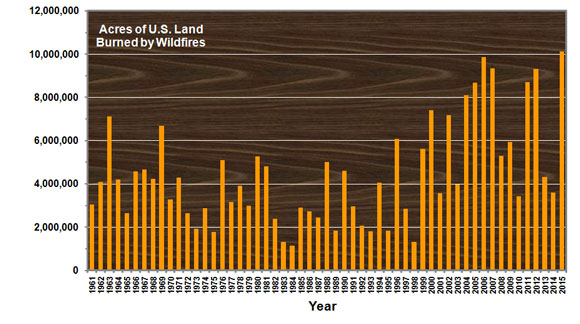
Annual amount of land burned by wildfires in the U.S., according to National Interagency Fire Center data. Image via D. E. Conners, EarthSky.

Moisture levels in the state and across the west seem to be up this winter, with snowpack exceeding averages for the first time in several years, so there is cause for hope that the 2016 fire season will be nothing to write home about.

Thursday, January 14, 2016

Revive, Winter 2015

revive

It comes like a tonic. Get it HERE.

"The Cat" by Lawrence Ferlinghetti

"Daydreamer" by Kim Roberti


    The cat
                              licks its paw and
        lies down in
                            the bookshelf nook
                                                                 She
                                    can lie in a
                                              sphinx position
        without moving for so
                                         many hours
and then turn her head
                                to me and
                                          rise and stretch
       and turn
                       her back to me and
              lick her paw again as if
                                    no real time had passed
                     It hasn't
                                    and she is the sphinx with
                        all the time in the world
                                             in the desert of her time
             The cat
                    knows where flies die
                               sees ghosts in motes of air
                                                   and shadows in sunbeams
She hears
                  the music of the spheres and
       the hum in the wires of houses
                           and the hum of the universe
             in interstellar spaces
                                                      but
                prefers domestic places
                             and the hum of the heater


"The Cat" by Lawrence Ferlinghetti from These Are My Rivers. © New Directions, 1993. 

Wednesday, January 13, 2016

Spine of the South

Awesome. And I mean the dictionary definition: "1: expressive of awe 2: inspiring awe."

I discovered this on The Adventure Blog. A permanent link to this doorway to adventure is now in my bloglist in the right margin.

In 2015 Overland Collective photographer Eric Hanson traveled the Andean spine of South America, from Ecuador to Patagonia. For seven months, he traveled almost entirely solo, via a mixture of public transportation, trekking, and a Great Wall Wingle (if you don't know what that is, it's the finest vehicle known to man). Along the way, he took a few hundred thousand photos.

Fly Fishing Italy -- Piave and Cismon

Two more rivers to put on the bucket list.

Fly Tying: My Mouse Fixation

This one has foam ears. What next?

Tuesday, January 12, 2016

Fly Tying: Got Feathers?


From Monograph of the Phasianidae, or, Family of the Pheasants by D.J. Elliot, 1872.

Bucknasty Browns -- Full Film from the 2015 F3T

Take a break and watch if you haven't seen this before--it's well worth the time. Some beautiful shots and great action including some mousing toward the end. 

Monday, January 11, 2016

Master Fisher

An osprey caught on film on a Finnish lake.