Showing posts with label conservation. Show all posts
Showing posts with label conservation. Show all posts
Saturday, July 9, 2016
Working for Wild Trout
The elements that go into ensuring that the Henry's Fork remains a prime fishery.


Sunday, July 3, 2016

Wednesday, April 13, 2016
America's Most Endangered Rivers

America’s Most Endangered Rivers is a list of rivers at a crossroads, where key decisions in the coming months will determine the rivers’ fates. Over the years, the report has helped spur many successes including the removal of outdated dams, the protection of rivers with Wild and Scenic designations, and the prevention of harmful development and pollution.
This year, we found that outdated and ineffective methods of water management threaten major river basins on both the east and west coasts. The Apalachicola-Chattahoochee-Flint (ACF) River Basin, which includes portions of Alabama, Georgia and Florida, ranks number one on the list, followed by the San Joaquin River in California at number two.
More than eight million people depend on clean drinking water from these two systems combined, and water shortages threaten billions of dollars in agricultural production and fisheries.
The America’s Most Endangered Rivers list spotlights rivers facing urgent threats across the country. The Susquehanna River, for example, which flows through Pennsylvania and Maryland, is threatened by harmful dam operations. In Montana, the Smith River is at risk from a proposed mine and remains on the endangered list for a second year.
Break it down at American Rivers.
Thursday, April 7, 2016
The Wild Steelheader, April 7, 2016
| |||
| |||
|


Thursday, February 18, 2016
Take Action on the Tongass

As many of you know, the Tongass National Forest is 'America's Salmon Forest' and is one of the few places in the world where wild salmon, steelhead and trout still thrive.Through next Monday, Feb. 22, we have a chance to help keep it that way.
 Right now, anglers across the country have an opportunity to protect key areas of the Tongass for salmon and steelhead, many of which are still open to development activities that can harm important habitat. Click here to act now!
In short, the Forest Service has proposed changes to its Tongass Land Management Plan, and their proposal puts fish and wildlife on a more even footing with resource extraction for the first time. This is a huge step in the right direction.
More than 70 unique watersheds within the Tongass, locally known as the Tongass 77, have been identified as the most important to salmon, steelhead and trout by a group of scientists and Southeast Alaskan stakeholders. Now is the time to tell the Forest Service to conserve these critical areas for salmon, steelhead and trout.
Please take a moment to tell the Forest Service that their final plan should protect the high-value streams for salmon and steelhead. The comment period ends Feb. 22, so don't delay!
Thank you for helping to keep America's Salmon Forest thriving.

Click the link below to log in and send your message:
https://www.votervoice.net/
Friday, January 22, 2016
Eternally Wild
Eternally wild--our hope, our prayer, our task.
Eternally Wild is a short film about California’s iconic Smith River, its steelhead, its history and its current plight.
Here there are no dams, no wretched clear-cut blocks, no mitigating hatcheries. Instead... ancient forest, iconic redwoods and a powerful symbol of freedom -- THE SMITH.
But 4,000 acres of the pristine North Fork are threatened by a giant toxic nickel mine operation.
The Red Flat Nickel Corporation has applied to sink 59 drill holes that would pave the way for one of the largest nickel mines in the Western United States. The film, by Keith Brauneis Productions and California Trout, examines current conditions and discusses future threats and asks just how much protection is enough?
Thursday, December 31, 2015
Is There Such a Thing as Wilderness Anymore?

Is there such a thing as wilderness anymore?
Author Jason Mark looks for wilderness in the age of man and finds it in unexpected places.
Recently I sat down with a book that within a chapter or two had me reanalyzing that every opinion I hold about what nature is, what wilderness is and what we can, can't, should and shouldn't do to our planet. This book is "Satellites in the High Country: Searching for the Wild in the Age of Man" by Jason Mark.
To most conservationists, there's nothing more sacred than wilderness and no act more honorable than to preserve and protect it. But what exactly is wilderness? Is there a way to use it that is of benefit to both humans and the environment? Mark goes looking for answers, searching out any remnants of untouched wilderness, exploring the various sides of controversial projects that help or hinder the health of an ecosystem, unraveling this oddly complicated relationship we have with trying to micromanage wilderness in an effort to perpetuate it and celebrating wilderness's wily ability to escape even our most valiant efforts to contain it.
Read more.
Sunday, December 13, 2015
Good News!

Yesterday morning the storm on the coast cleared. At the Northwest Marine Center in Port Townsend the Washington Fish and Wildlife Commission voted unanimously to approve recomended sportfishing rules for the Olympic Peninsula. These rules were brought forth by the ad hoc North Coast Steelhead Advisory Group, a group of Olympic Peninsula guides, steelheaders, scientists and conservationists.
Wild Steelheaders United and Trout Unlimited played a strong roll in getting these approved, so thank you. Hundreds of you sent in comments, four local chapters and more than 20 members of WSU came to the November commission meetings. Last week five TU chapters from across Washington, followed up with their local commissioner let them know we are together in the effort to protect wild steelhead. We were not the only voices. This was a great effort by wild steelhead advocates, both gear and fly anglers. In other words we were united.
To quote Commissioner Miranda Wecker, "The North Olympic Rivers represent our last remaining stable stocks of wild steelhead....I, for one, do not want to be part of running these stocks into the ground."
What this means
In the 2016/2017 season WDFW will:
1. End the harvest of wild steelhead and rainbow trout
2. Implement a barbless rule
3. Stop the use of bait to limit impact to juvenile steelhead, smolt and resident rainbow trout.
4. Implement a no fishing from a floating device on six miles of the Hoh River. This will help provide refuge for steelhead within heavily fished river sections.

Wild steelhead face many hurdles on their way to the spawning grounds. Limiting our impact as anglers is an important step to protecting these fish. It is also an important message to fisheries managers that we are united in our desire to see these fish flourish. Recovery should not have to happen after collapse and closure, but instead through smart management and habitat restoration.
Thank you,
Dwayne Meadows
PNW Outreach Coordinator
Trout Unlimited
1. End the harvest of wild steelhead and rainbow trout
2. Implement a barbless rule
3. Stop the use of bait to limit impact to juvenile steelhead, smolt and resident rainbow trout.
4. Implement a no fishing from a floating device on six miles of the Hoh River. This will help provide refuge for steelhead within heavily fished river sections.
Wild steelhead face many hurdles on their way to the spawning grounds. Limiting our impact as anglers is an important step to protecting these fish. It is also an important message to fisheries managers that we are united in our desire to see these fish flourish. Recovery should not have to happen after collapse and closure, but instead through smart management and habitat restoration.
Thank you,
Dwayne Meadows
PNW Outreach Coordinator
Trout Unlimited
Tuesday, December 8, 2015
R. I. P. Douglas Tompkins
The world has lost an influential conservationist.

Douglas Tompkins, 72, founder of North Face, died today in a kayaking accident.
Read the New York Times obituary HERE.
Douglas Tompkins, 72, founder of North Face, died today in a kayaking accident.
Read the New York Times obituary HERE.
Thursday, December 3, 2015
Ted Williams Interview
An interview with legendary environmental writer Ted Williams from Monte Burke, Contributing Editor at Forbes Magazine.

"Most of us who pay even the slightest bit of attention to outdoor and environmental writing already know this for a fact: Ted Williams is a national treasure. I can think no one who so consistently—and effectively—bangs the drum on behalf of the environment, conservation, our game, fish and wild, open spaces. Williams calls out the miscreants and criminals who trash our environment, and praises the heroes who fight for it. His prose is candid, clear-eyed and concise. Williams is also opinionated but always supported by well-researched facts. He has become, in many ways, the modern-age equivalent of Rachel Carson for sportsmen.
"Williams has written four books. Fly Rod & Reel magazine has admirably given him ample column space for many years. He also writes a regular column for The Nature Conservancy, and is a frequent contributor toAudubon, Mother Jones and High Country News.
"I recently caught up with Ted to talk about the growing divide between sportsmen and environmentalists, the NRA, Obama’s record on the environment, feral cats and his favorite fish."
Read more HERE.
Sunday, November 29, 2015
RIVER POLLUTION
It makes me sick to see this, but I think more and more people need to see it. When will an outrage like this finally tip the balance and lead to sane safeguards and controls?
Friday, November 20, 2015
The Wild Steelheader, November 18, 2015
Greetings,
Most of you out there-by the very virtue of receiving this newsletter-support wild steelhead conservation. And not just a little. You understand the fishing gospel, so to speak; the part that says, "Take care of the fish and the fishing will take care of itself." You're the converted. The chosen ones who will lead steelheaders forward into better waters.
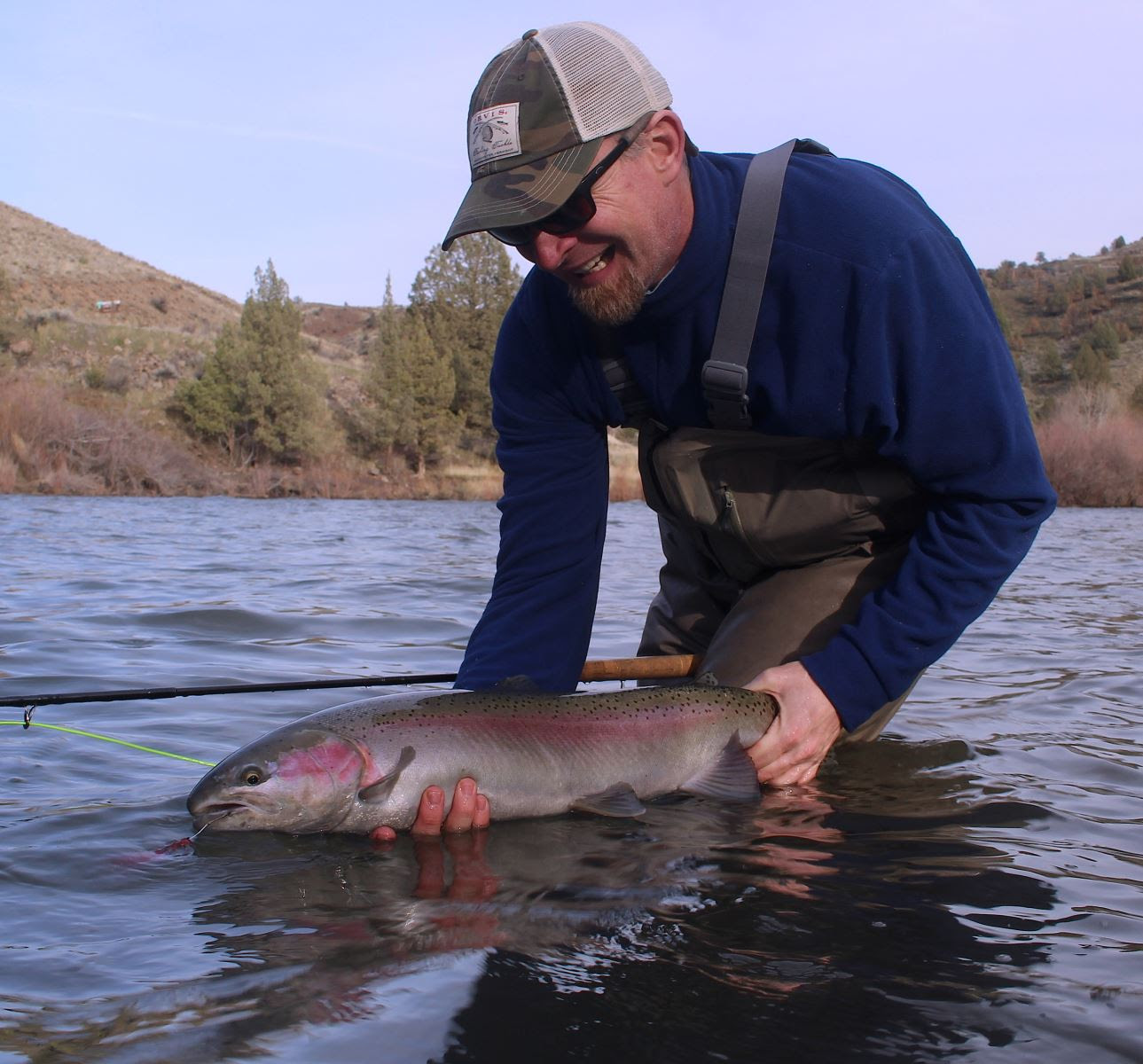
But what about all the other steelhead anglers out there?
As it turns out they support conservation too.
How do we know? Well, simple. We asked.
This summer, Trout Unlimited, with the help of Southwick and Associates, a well regarded, non-partisan public opinion research firm that specializes in natural resources issues, conducted a poll that, to our knowledge, has never been conducted before. The poll surveyed more than 600 active steelhead anglers in Washington, Oregon and California regarding fishing preferences and opinions on steelhead management.
And for the most part, the results confirmed what we at the WSU have long suspected: We all-be it bait anglers, gear anglers, fly anglers, bank fishermen, boat fishermen, North, South, Democrat or Republican-have more that unites us than divides us.
Being a science-driven group that believes in the power of data, we feel compelled to review the numbers (full reports are available on our website).

- A solid majority of anglers (62 percent) favor a balanced approach to managing steelhead with some rivers for wild steelhead and other rivers for hatchery fish.
- When wild populations are low, a strong majority (68 percent) of anglers support releasing any wild fish caught versus just 24 percent of anglers who would prefer to keep wild fish they caught.
- In order to protect wild steelhead, more anglers (55 percent) chose longer seasons with more restrictions on fishing gear and methods than shorter seasons with fewer gear/method restrictions (32 percent).
- 58 percent of anglers support closing a hatchery that provides harvest opportunity if that hatchery harms wild steelhead and jeopardizes a catch-and-release fishery for wild fish. Given these conditions, only 27 percent of anglers supported keeping the hatchery in operation.
The numbers tell the story. We as steelhead anglers have great value for wild steelhead, their conservation and the opportunity to fish for them. Now it's time to get down to the hard work of restoring them.
Two things you can do for steelhead right now:
- Help us celebrate our birthday! Wild Steelheaders United launched one year ago this week, and it's been a crazy and rewarding ride. Help us double our ranks of dedicated steelheaders by getting one friend to sign the credo. Just one. And if you have more than one friend, get them to sign the credo too. Let's make 2016 the Year of the Steelhead.
- Help a steelhead. Buy a hat. If you haven't ordered your very own Wild Steelheaders United hat, now is the time (Christmas presents anyone?). A portion of all sales go directly back to WSU.
WSU Welcomes Nick Chambers
From Nick:

I would like to introduce myself to all of you as the newest staff member of Trout Unlimited's Wild Steelhead Initiative. I hail from a small town in Southwest Oregon and am a third generation Pacific Northwest angler and hunter. My first steelhead encounter came on my childhood home waters of the Rogue River. The experience changed my life forever and I have since dedicated myself to pursuing
steelhead and learning their habits and biology.
I have been fortunate enough to fish for steelhead throughout their native range from California to Alaska and I continue to be a student of these fish. I hold a fisheries degree from Oregon State University and have worked for a variety of agencies and organizations in fisheries research and management and guided in Oregon and Alaska. I have also been an active member of TU and helped to organize and participate in a number of angler science events. As the Washington based organizer I will be working with staff and our awesome volunteers to continue the work that has begun over the past year and help to expand the reach of the Wild Steelheaders United. I look forward to meeting and working with many of you.
Washington
Anglers turned out in droves to support the WDFW Olympic Peninsula (OP) rule
changes. More than 3,000 comments were submitted on the proposal that, among other things, would eliminate wild steelhead harvest and ban bait fishing during the period when most wild steelhead return to the OP. Rob Masonis and John McMillan testified on behalf of TU and Wild Steelheaders United. Many of you played a vital role in generating comments and being present to testify. An overwhelming majority of written and oral comments supported the changes. The Commission will meet again in December to come to a decision.
On the other side of the state, Washington's Western Water and Habitat staff has been working to keep water in important steelhead tributaries. After dangerous drought conditions in the Yakima River Basin, key tributaries and their steelhead entered the fall season in a precarious position. Many tributaries dried completely
as temperatures soared, base flows dropped, and irrigators used what little creek water existed to keep crops alive. To help save steelhead and the creeks, Trout Unlimited leased 2.5 cfs of irrigation water for instream flows while the Kittitas Reclamation District wheeled downstream water rights through its canal system
and spilled the water at canal-tributary intersections. KRD supplemented creeks to mimic natural summer flows by as much as 15 cfs depending on stream size. This work by KRD, TU and Washington Department of Ecology was enough to keep seven streams alive and give steelhead a fighting chance during a critical drought year.
Idaho

Juvenile and adult steelhead will soon get access to more spawning and rearing habitatin Idaho's upper Salmon River basin. TU, in coordination with the Upper Salmon Basin Watershed Program, has begun to move irrigation diversions on important steelhead tributaries of the Lemhi River to points downstream. Water will be pumped to irrigators' fields from those downstream points where there is more water, which will keep enough water in the upper tributaries so that steelhead can use them.
Oregon
This month Oregon's Board of Forestry announced it would increase no-logging buffers from 20 feet to 80 feet on medium streams and 60 feet on small streams - a huge victory for steelhead.
While TU and WSU were not the only players in the fight to increase buffers, the work many of you did to reach out to the board and voice your support for healthier riparian areas made the difference. Thanks to you, more than 14,000 miles of Oregon streams will enjoy cooler water conditions when they need it the most, giving fish the necessary shade and shelter they need in the height of summer.

Also in Oregon, steelhead will face one less barrier as they migrate up the 120 miles ofbig water on the Nehalem River. This year the Upper Nehalem Watershed Council, with the help of the TU and the Orvis 1,000 Miles Campaign, replaced a barrier culvert with a full span arch culvert on Oak Ranch Creek in the upper Nehalem. This is just Phase 1 of a two-phased project to restore more the 6 miles of spawning habitat. Learn More.
California
The Klamath River is the epicenter of one of the nation's most bitter water wars and time is running out for Congress to implement landmark agreements that would provide water security for agriculture, tribes, communities and fish and wildlife. Trout Unlimited played an important role in negotiating these agreements, which must be authorized by Congress before the end of the year to be fully implemented. The issue has been covered by the New York Times, Circle of Blue, Public News Service and other media. Also a new film A River Between Us tells the human story of the Klamath water struggles and the cost to lives, cultures, and communities.
Also in California, Wild Steelheaders United hosted two Steelhead Science for Anglers events at the Aquarium of the Pacific in Long Beach and at the Veterans Center in Davis. These educational workshops brought together steelhead researchers, advocates, and anglers to discuss the latest science on O. mykiss.
Alaska
A new blog series has been launched highlighting the people and fish of select watersheds in Southeast Alaska's Tongass National Forest, where TU has proposed permanently protecting 77 key watersheds. In addition to possessing excellent steelhead fishing these watersheds are home to all five species of salmon, cutthroat and char. The most recent post features' TU's Mark Hieronymus and his experiences in Sitka, home to 14 of these key watersheds. Send your comments to the Forest Service and let them know that conserving these 77 key watersheds is important to steelhead anglers.
Saturday, November 14, 2015
Chi Wulff Calls Them Out

Kudos to Chi Wulff again. They hit the nail on the head with a story on access rights, James Cox Kennedy, the Ruby River, Ducks Unlimited, and what is all too often business as usual: big money throwing its weight around, and vested interests failing to have the uh, "eggs" to stand up to it. The losers when that happens are all of us who put a higher value on wild lands and waters than a dollar amount.
Chi Wulff calls them out. Read it here.
Friday, November 13, 2015
The Drake Weighs In on Washington State Steelhead Woes
Good piece from The Drake, and an opportunity to take action on critical rule changes being proposed by the Washington Department of Fish and Wildlife.

WHY THE STAUS QUO IN WASHINGTON STATE IS FAILING STEELHEADERS
WASHINGTON, OLYMPIC NATIONAL PARK—Most anglers will change anything and everything to feel the tug of a wild steelhead. After swinging through a few juicy runs without a grab, we'll vary our presentations. A few more unproductive runs will result in changed tips, new flies, or yes... even a bobber and bead. By the end of an unfruitful day, we might even wade waist-deep and bare-assed if we thought it would guarantee a hookup.
Read more.
Luke Kelly Photo
WHY THE STAUS QUO IN WASHINGTON STATE IS FAILING STEELHEADERS
WASHINGTON, OLYMPIC NATIONAL PARK—Most anglers will change anything and everything to feel the tug of a wild steelhead. After swinging through a few juicy runs without a grab, we'll vary our presentations. A few more unproductive runs will result in changed tips, new flies, or yes... even a bobber and bead. By the end of an unfruitful day, we might even wade waist-deep and bare-assed if we thought it would guarantee a hookup.
Yet when it comes to altering angling practices to conserve and rebuild wild steelhead populations, our community of anglers can be more reticent to discuss change.
Read more.
Thursday, November 12, 2015
Steelhead Plate?

The Washington Department of Fish and Wildlife is proposing a Steelhead license plate to raise $200K a year to support conservation efforts to benefit these fish. State law requires 3,500 signatures on an "intent to purchase" petition before such plates can be issued.
Read more, and reserve your copy.
Good News On the Salmon Front
Here is something to celebrate in the long battle to restore salmon runs in the Pacific Northwest. It's just one thing--the battle is far from over.
There are some saying that this shows that the "hippies" worrying about "so-called climate change" have been wrong all along. I wish some people would climb out of their little ideological boxes and actually think. Or at least read the whole article.
What this shows is that in the face of unprecedented challenges to the salmon runs--including the effects of climate change--concentrated efforts to, according to the Bonneville Power Administration statement, "balance the needs of salmon with power production, flood control and other river uses" can be successful.
A small victory to build on for people committed to the collaborative spirit that made it possible.

Salmon return to Hanford Reach in record numbers
SPOKANE, Wash. (AP) - The number of fall chinook salmon returning to the Hanford Reach section of the Columbia River this year is the most since dams were constructed in the 1930s, the Bonneville Power Administration said this week.
Scientists estimate 200,000 chinook are spawning in the Hanford Reach, which is the last free-flowing section of the Columbia in the United States. The Hanford Reach flows past the giant Hanford Nuclear Reservation, where the government for decades made plutonium for nuclear weapons.
Approximately 50,000 of the fall chinook are spawning in a one-mile section of the Hanford Reach called Vernita Bar, the BPA said. Historically only a small number of salmon spawned at Vernita Bar because that stretch of the river was too shallow, the BPA said. But special efforts have been made to keep salmon spawning grounds submerged there, the BPA said.
Read More.
There are some saying that this shows that the "hippies" worrying about "so-called climate change" have been wrong all along. I wish some people would climb out of their little ideological boxes and actually think. Or at least read the whole article.
What this shows is that in the face of unprecedented challenges to the salmon runs--including the effects of climate change--concentrated efforts to, according to the Bonneville Power Administration statement, "balance the needs of salmon with power production, flood control and other river uses" can be successful.
A small victory to build on for people committed to the collaborative spirit that made it possible.
Salmon return to Hanford Reach in record numbers
SPOKANE, Wash. (AP) - The number of fall chinook salmon returning to the Hanford Reach section of the Columbia River this year is the most since dams were constructed in the 1930s, the Bonneville Power Administration said this week.
Scientists estimate 200,000 chinook are spawning in the Hanford Reach, which is the last free-flowing section of the Columbia in the United States. The Hanford Reach flows past the giant Hanford Nuclear Reservation, where the government for decades made plutonium for nuclear weapons.
Approximately 50,000 of the fall chinook are spawning in a one-mile section of the Hanford Reach called Vernita Bar, the BPA said. Historically only a small number of salmon spawned at Vernita Bar because that stretch of the river was too shallow, the BPA said. But special efforts have been made to keep salmon spawning grounds submerged there, the BPA said.
Read More.
Tuesday, April 21, 2015
Happy Birthday, John Muir

“The mountains are calling and I must go.”
-- John Muir

"As long as I live, I'll hear waterfalls and birds and winds sing. I'll interpret the rocks, learn the language of flood, storm, and the avalanche. I'll acquaint myself with the glaciers and wild gardens, and get as near the heart of the world as I can".”
-- John Muir
We who love the outdoors today owe a great debt of gratitude to John Muir. His work helped ensure that we would have an outdoors to love, and stands as an enduring example to all who want our children and grandchildren to have the same privilege.
This brief biography is from The Writer's Almanac:
It's the birthday of naturalist John Muir (books by this author), born in Dunbar, Scotland (1838). He grew up on a farm in Wisconsin. His father was a strict Christian, and by age 11, Muir could recite three-quarters of the Old Testament and all of the New Testament by heart. One evening, the boy was up late reading, and his father forbade him from staying up late, but decided that as a compromise, he could get up as early as he wanted in the morning. Muir began getting up at 1 a.m. and going to the cellar to work on inventions by the light of a tallow candle. He invented a self-setting sawmill, thermometers, barometers, complex door-locks, an automatic horse-feeding machine, clocks, a firelighter, and many more tools. For motivation in the dark winter mornings, he invented an elaborate clock that also told the day of the week and the month, and was connected to a bed that set him on his feet at an appointed hour.
He exhibited some of his inventions at the state fair, and made enough money to enroll at the University of Wisconsin-Madison. One day, he was standing underneath a black locust tree when a fellow student asked Muir if he knew what family the locust tree was in. Muir said that he didn't know anything about plants, so the student asked him, well, what does the flower look like? Muir said it looked like a pea flower. When the student explained that they were in the same family, Muir was amazed, even more so after the other student explained the principles of taxonomy. He wrote: "This fine lesson charmed me and sent me flying to the woods and meadows in wild enthusiasm. [.] I wandered away at every opportunity, making long excursions round the lakes, gathering specimens and keeping them fresh in a bucket in my room to study at night after my regular class tasks were learned; for my eyes never closed on the plant glory I had seen." Despite his new fascination with plants, he was a mechanical genius, and he remained equally interested in inventions. He improved his clock-bed, which now set him on his feet and simultaneously lighted a lamp. The bed was supplemented by a clockwork desk that kicked into gear as soon as he woke up; it took each book he needed to study in order, pushed it to the top of the desk, and opened it for the correct number of minutes. He invented a wide variety of complex scientific instruments. Professors were so amazed that they regularly brought visitors to Muir's dormitory room on the weekends to show off his inventions. Muir chose not to follow a recommended course of study. Instead, he dabbled in whatever interested him, from botany to Latin, and left Madison without a degree. Before his death, he wrote about his college years: "I wandered away on a glorious botanical and geological excursion, which has lasted nearly 50 years and is not yet completed, always happy and free, poor and rich, without thought of a diploma or of making a name."
Muir found work as a sawyer in a wagon wheel factory. He was quickly promoted, and expected to have a great career. But after a year, he was repairing a belt for a circular saw when a file slipped and struck his eye, and he was temporarily blinded. He spent six weeks in a dark room, not knowing if he would ever see again. When his sight did return, he realized how important the beautiful world was to him. He wrote: "It was from this time that my long continuous wanderings may be said to have fairly commenced. I bade adieu to all my mechanical inventions, determined to devote the rest of my life to the study of the inventions of God." He set out on a 1,000-mile walk from Indiana to the Gulf of Mexico, then walked from San Francisco to the Sierra Nevada.
Muir went on to become one of the most important naturalists and conservationists in American history. He founded the Sierra Club and helped fight to protect wilderness areas, especially the area around Yosemite Valley in the Sierra Nevada mountains. His books include Picturesque California(1888), My First Summer in the Sierra (1911), and The Story of My Boyhood and Youth (1913).
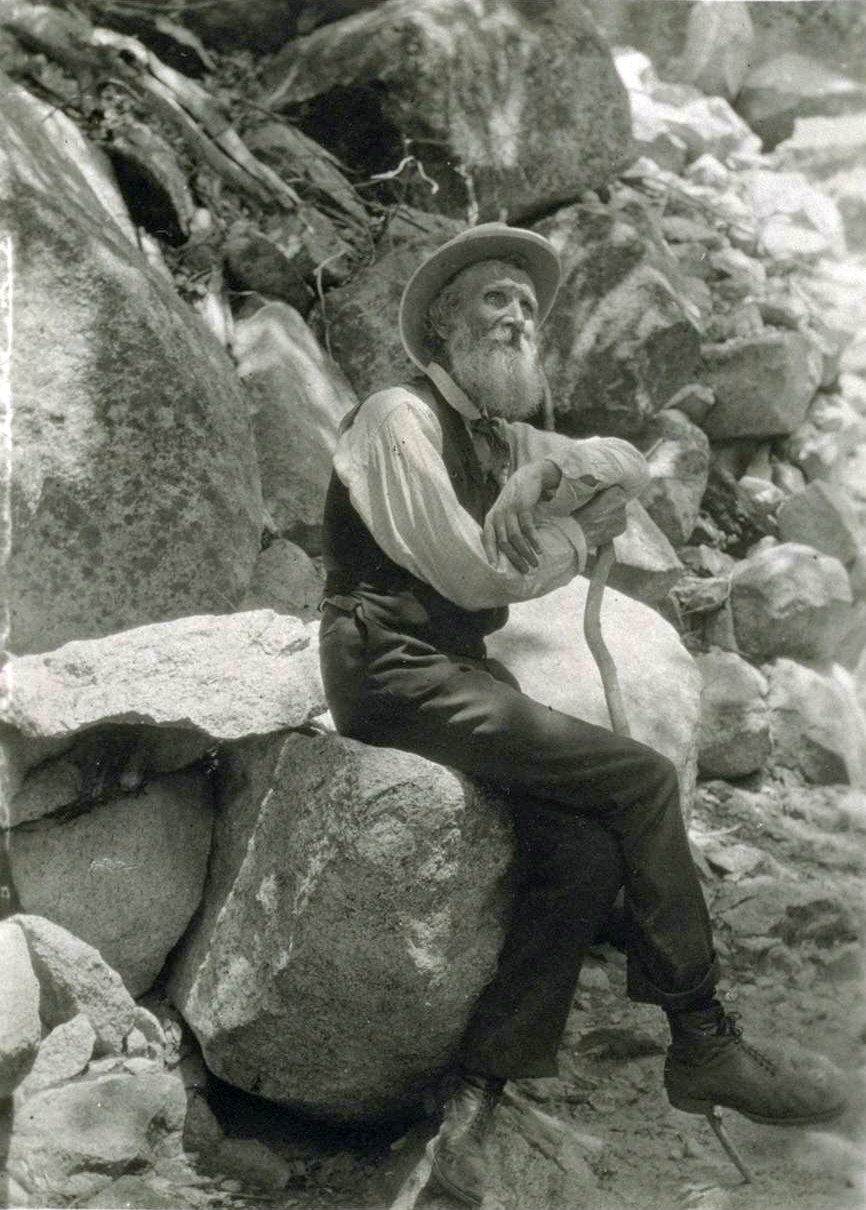
"Climb the mountains and get their good tidings. Nature's peace will flow into you as sunshine flows into trees. The winds will blow their own freshness into you, and the storms their energy, while cares will drop away from you like the leaves of Autumn.”
-- John Muir, The Mountains of California
Wednesday, April 8, 2015
America's Most Endangered Rivers 2015

American Rivers has just released their report on the ten rivers facing the most urgent threats.
Click HERE to visit their website to learn more about each river, what is being done to save them, and how all of us can be a part of the solution.
Saturday, March 21, 2015

Thursday, February 26, 2015
Subscribe to:
Posts (Atom)