All five bright planets will appear together in the morning sky from about January 20 to February 20, 2016. That hasn’t happened since 2005.
Showing posts with label earthsky. Show all posts
Wednesday, January 20, 2016
Friday, January 15, 2016
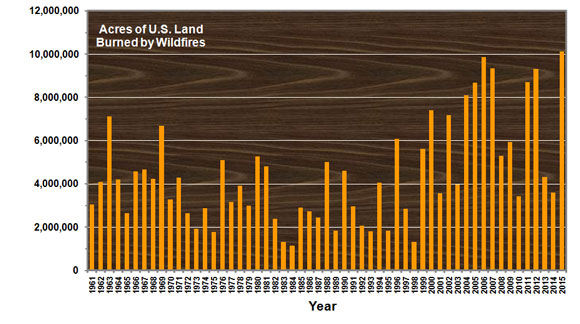
2015 Worst US Wildfire Year on Record
View from Trout Lake, August 18, 2015.
The Okanogan Complex Fire, which started from multiple lightning strikes on August 15,
became the biggest wildfire ever in the state of Washington, burning 304, 782 acres.
From Earthsky:
According to new preliminary data released by the National Interagency Fire Center (NIFC), wildfires scorched more than 10 million acres of land in the United States during 2015. That makes 2015 the worst wildfire year on record based on data dating back to the early 1960s. The year was marked by intense drought across much of the western U.S., which likely contributed to the high levels wildfire activity.
Read more.
Moisture levels in the state and across the west seem to be up this winter, with snowpack exceeding averages for the first time in several years, so there is cause for hope that the 2016 fire season will be nothing to write home about.
Thursday, December 31, 2015
Monday, December 21, 2015
Happy Solstice!
The separation of day and night at Winter Solstice 2015.
From Earthsky.
I'm posting this at 8:48 P.M. PST (4:48 UT, December 22), the very moment of the Winter Solstice. The sun, from our viewpoint on this spinning globe, has reached as far south as it will go, and is now beginning to move back north. We in the Northern Hemisphere have made it through the darkest time of the year. Now, this minute, the journey back to light and warmth, a long, beautiful journey, has begun.
Have a great trip.
Monday, December 7, 2015
Venus/Crescent Moon Occultation
We've been under the clouds for awhile, so I missed the latest celestial display.
Not so for others. Here are just two photos from Earthsky of the Venus/crescent moon occultation today. The first shows the moon moving toward Venus, and the second shows Venus just before it disappears behind the moon. Sorry I missed it.
5:30 PM on another cold, wet, overcast evening
Not so for others. Here are just two photos from Earthsky of the Venus/crescent moon occultation today. The first shows the moon moving toward Venus, and the second shows Venus just before it disappears behind the moon. Sorry I missed it.
Lyle Evans in Highland, California
Steve Pauken in Winslow, Arizona
Labels:
celestial objects,
crescent moon,
earthsky,
Venus
Thursday, December 3, 2015
Jupiter and Moon Alert!
Before dawn on Friday morning – December 4, 2015 – you’ll have another chance to see the waning crescent moon with the giant planet Jupiter in the predawn sky. Simply look for the brilliant starlike object close to the moon.
From Earthsky.
Monday, September 7, 2015
Wow
New NASA/ESA Hubble Space Telescope of Messier 96, a spiral galaxy. Image via ESA/Hubble & NASA and the LEGUS Team, Acknowledgement: R. Gendler
NASA and the European Space Agency (ESA) released this new Hubble image on Friday, September 4, 2015. It’s Messier 96 – called M96 by astronomers – a spiral galaxy just over 35 million light-years away in the direction of the constellation of Leo the Lion. It’s about the same mass and size as our home galaxy, the Milky Way.
(From Earthsky.)
Labels:
earthsky,
ESA,
Hubble Space Telescope,
Messier 96,
NASA,
spiral galaxy,
Wow
Thursday, September 3, 2015
Zennnnnnnnnnnnn....
In case you still think you are the center of the universe.....
Here is Earth from 900 million miles away, from the vantage point of the rings of Saturn.
Image via the Cassini spacecraft, which has been orbiting Saturn since 2004.
This image was acquired by Cassini on July 19, 2013. From Earthsky.
Wednesday, August 12, 2015
Perseids Peak Tonight
Tonight's the night to get out and look up. I'll be taking in the view from the lake.
The radiant point for the Perseid meteor shower is in the
constellation Perseus. But you don’t have to find
a shower’s radiant point to see meteors. Instead,
the meteors will be flying in all parts of the sky.
(Photo and illustration from Earthsky.)
Labels:
August,
earthsky,
meteor shower,
Perseid Meteor Shower,
space,
Summer
Tuesday, July 14, 2015
Hello, Pluto
Image by NASA from the New Horizon spacecraft, taken on July 14, 2015,
from 7,750 miles above the surface of Pluto. From Earthsky.
Labels:
earthsky,
NASA,
New Horizons spacecraft,
Pluto,
space,
stars and planets
Friday, June 19, 2015
Awe is Good for Your Health
The three brightest objects in the night sky--the moon, Venus, and Jupiter--will be appearing close together over the next three evenings. Take a look: studies show that awe is good for your health.
Labels:
awesome,
earthsky,
Jupiter,
moon,
mother nature network,
night sky,
stars and planets,
Venus
Saturday, February 21, 2015
Fifteen Minutes
I submitted three of my photos of the conjunction on Friday evening to Earthsky, one of my favorite science sites. What do you know, they posted one of them.
But check out the caption.
I start out the evening as an unknown, and now I have a town in Washington named after me.
To see more photos on Earthsky, click HERE.
But check out the caption.
Jim Yaussy submitted this photo to EarthSky.org from Albright, Washington.
To see more photos on Earthsky, click HERE.
Labels:
astronomy,
conjunction,
crescent moon,
earthsky,
fame,
Mars,
Venus
Thursday, February 19, 2015
Heads Up: Venus, Mars, and Crescent Moon
This is why I'd rather live in this universe than any other. Venus and Mars have been spectacular the past few evenings. And now the newborn crescent moon will join them.
This is a bona fide phenomenon. Hope you can check it out where you live. I'm planning to be at Rocky Ford Creek on the evening of the 20th, and there's a good chance it will be clear. If it is, I'll be soaking it all in.
Earthsky has this to say about this celestial event:
The planets Mars and Venus are about to be at their closest in our sky since 2008. They won’t be closer until 2017! Their nearest point is Saturday, but tonight – February 19, 2015 – you’ll find these two planets in the west after sunset, nearly as close as they will be then. Venus is the much brighter one. What’s more, the young moon is now returning to the west after sunset. And that means we’re about to have some incredible scenes in the western, twilight sky. Friday night’s sky scene will be especially grand.
Although the new moon fell yesterday, February 18, we still expect some observant people in the Northern Hemisphere – especially in North America – to catch the whisker-thin young crescent moon after sunset Thursday evening. Look westward, beneath Venus – the brightest planet and bright evening “star” – and near the horizon, starting an hour or less after sunset. Binoculars may be helpful!
It’ll be harder, though not impossible, to catch an even thinner lunar crescent from northerly latitudes in Europe – and harder yet at northerly latitudes in Asia. We expect few, if any, observers at temperate latitudes in the Southern Hemisphere to spot the young moon after sunset February 19. We tell you why later.
Whatever you do, just start watching the western twilight sky. Set a reminder on your phone if need be. The planets and moon won’t be up for long after sunset. And the views will be spectacular from now through Saturday night!
Labels:
astronomy,
conjunction,
crescent moon,
earthsky,
Mars,
night sky,
space,
Venus
Sunday, December 21, 2014
Winter Solstice 2014
Sunlight on Earth, on the day of the winter solstice.
The north polar region of Earth is in 24-hour darkness,
while the south polar region is in 24-hour daylight.
Gif via Wikimedia Commons. (From Earthsky.)
The Winter Solstice is here. The important thing to know is that at 23:03 UTC (3:03 PM PST, 4:03 PM MST, 5:03 PM CST, 6:03 PM EST) the dark retreats, and light begins its welcome return.
Happy Solstice!
Labels:
December,
earthsky,
First Day of Winter,
winter,
winter solstice
Wednesday, October 8, 2014
Full Moon Puts On Show, Makes Some Happy
The Hunter's Moon, being eclipsed here by gathering clouds. Those willing to stay up or get up early can see it, weather allowing, eclipsed by the rising sun in a total eclipse. It's also a Blood Moon.
Me, I'm mostly like these guys. Full moons just make me happy.
Illustration by Theodor Kittelsen.
Labels:
astronomy,
Blood Moon,
earthsky,
full moon,
Hunter's Moon,
October,
total lunar eclipse
Friday, May 23, 2014
Heads Up: Brand New Meteor Shower!
For the first time ever the earth will pass through the debris field of the newly discovered Comet LINEAR.
The result: a brand new meteor shower for sky watchers in the Northern Hemisphere. Already being called the "May Camelopardalids," the meteor shower will reach its peak Friday night and into Saturday morning. Best times will be between 2 and 4 AM EDT.
The latest viewing prediction based on local weather:
And the location of the Camelopardalis constellation from which the meteors will appear to radiate.
EarthSky says that it could be the best meteor shower of the year, but it also stresses that, since this has never occurred before, it's all hypothetical until we see the actual meteors. (Go to the link for much more information.)
So head out, look up, and maybe see the birth of a new heavenly wonder.
Labels:
astronomy,
Comet LINEAR,
earthsky,
May Camelopardalids,
meteor,
meteor shower,
space
Monday, April 14, 2014
Bad Moon Rising
Just dropped over to EarthSky. Glad I did. Big news!
There will be a total eclipse of the full moon tonight, April 14 - 15. Mars, the Red Planet, is the closest and brightest in 6 years, and will be visible near the red moon. Look for the star Spica, too.
This is known as a Blood Moon. Some people, of a particular religious or superstitious bent, believe this moon, and the three other Blood Moons occurring in 2014 and 2015--four in a row--are signs of the Apocalypse. Yes, that Apocalypse.
If you insist on getting all worked up about that, fine. Go for it. But if you have an open mind and are interested in learning more, you might find this link helpful:
I've already said on this blog that I'm a believer. And I believe that the End of the World is the Creator's department. I hope to be ready, whenever it is.
Meanwhile, I will be praying. I'll be praying that the skies are clear over north central Washington State tonight.
Labels:
astronomy,
Blood Moon,
Credence Clearwater Revival,
earthsky,
for your listening pleasure,
full moon,
Mars,
Spica,
the Apocalypse,
the end of the world,
total lunar eclipse
Friday, January 24, 2014
The Light Is Returning
One month after the Winter Solstice, the sun's light is returning to the Arctic Circle.
These photos, taken by Jan Inge Larson in northern Norway, show the horizontal rays of the sun as it just peeks over the horizon, and, at higher latitudes, the "blue hour"--normally twilight, but now the brightest time of the day.
Photos and map from EarthSky.
Labels:
Arctic Circle,
blue hour,
earthsky,
Norway,
winter,
winter solstice
Sunday, January 12, 2014
I Love the Concept of a Winter Circle
From EarthSky: There are many bright stars near Jupiter in 2014. The planet lies in the midst of what we stargazers in the Northern Hemisphere know as the Winter Circle. This beautiful photo captured January 11, 2014 by EarthSky Facebook friend Duke Marsh in Kentucky. Thank you, Duke.
Labels:
astronomy,
earthsky,
Jupiter,
moon,
night,
night sky,
star gazing,
The Winter Circle
Saturday, December 21, 2013
Solstice Count Down: Nine Hours
It was cold on Friday, and we got our first snowfall down in the valley. It was timely, brightening things up on the eve of the Winter Solstice.
Now there are just 9 hours until the "sun stands still" at 9:11 AM Pacific Standard Time, and the earth begins its tilt back toward the sun's warmth and light. Today will be the shortest day of the year. At our location, just a few miles from the Canadian border, there will be 8 hours and 16 minutes between sunrise and sunset.
Sunlight on Earth, on the day of the winter solstice.
The north polar region of Earth is in 24-hour darkness,
while the south polar region is in 24-hour daylight.
Gif via Wikimedia Commons.
But then, on Sunday, there will be 8 hours and 17 minutes. Enjoy that extra minute knowing that the light is coming back.
Happy Solstice, everyone.
Labels:
earthsky,
Everybody talks about the weather but nobody does anything about it.,
snow,
weather,
winter,
winter solstice
Subscribe to:
Posts (Atom)